What Elon’s GrokBot Tells Us About the Future of AI Agents
If you’ve been paying attention to xAI over the last few months, you’ve probably noticed two completely different narratives playing out side by side.
On one hand, tech Twitter (or X, if we’re being technical) is filled with praise for Grok’s raw speed, its DeepSearch capabilities, and its ability to dissect breaking news in real time without drowning you in corporate guardrails.
On the other hand, review boards and forums are sprinkled with frustrated users complaining about steep subscription pricing, strict rate limits, and clunky customer support.
So, what’s actually happening here? Is Grok a brilliant glimpse into the next generation of AI agents, or is it just an expensive perk for X Premium subscribers?
The answer is both—and what people love and hate about Grok reveals a whole lot about where the broader AI market is heading.
The Good: What Users Are Loving
Let’s start with why people are actually paying for Grok.
1. The Real-Time Firehose
Most AI models feel like talking to a brilliant professor who hasn't read the news since last year. Grok feels like sitting in a newsroom. Because it’s fed directly by X’s live data stream, it can summarize breaking stories, market spikes, and viral discourse as it happens. For power users, timeliness beats static wisdom every single time.
2. A Persona That Doesn't Walk on Eggshells
Love it or hate it, Grok’s "truth-seeking," slightly irreverent persona is a deliberate design choice that works for its target audience. While competitors often default to overly cautious, hyper-sanitized responses, Grok takes direct swings at complex topics. Users appreciate an assistant that doesn't feel like it was written by a risk management department.
3. Serious Reasoning Power
Behind the snark, the underlying technology (especially with recent Grok-3 and DeepSearch iterations) holds its own. Technical users point to its knack for math, code generation, and rapid scientific queries without forcing you to wade through fluff.
The Bad: Where the Friction Lives
It’s not all clean code and real-time news, though. The consumer complaints point to some serious growing pains.
-
Pricing & Usage Caps: Between $16/month (via X Premium+) and higher standalone tiers, users feel the pinch—especially when strict generation limits hit right in the middle of a workflow.
-
Support Frustrations: Trustpilot reviews highlight billing headaches, account sync issues, and non-existent support when things go wrong.
-
Tone Over Nuance: While Grok shines at factual and logical queries, users note it lags behind tools like Claude when it comes to creative writing, empathy, or nuanced prose. It can be sharp to a fault.
The Strategic Takeaway: What This Means for the AI Market
If you look past the noise, Grok’s playbook offers four critical insights for founders, investors, and product builders watching the AI agent space.
[ Traditional AI Agents ]              [ Next-Gen Market Shift ]
• Generic Knowledge Bases              • Live Social / Real-Time Data Ingestion
• Hyper-Neutral Guardrails             • Opinionated & Distinct Brand Personas
• Isolated Chat Web Apps               • Native Social & Distribution Integration
• One-Size-Fits-All Models             • Task-Specific Reasoning & Specialized Tiers
1. Real-Time Distribution Beats Benchmark Scores
For a long time, the AI race was measured purely on static benchmarks like MMLU or HumanEval. Grok proves that real-time contextual relevance is a massive product differentiator. An agent embedded directly into a live information stream provides value that isolated chat apps simply can’t match.
2. The Death of the Bland Assistant
Grok proves that personality is a feature, not a bug. The market is moving away from uniform "helpful assistants" toward differentiated, opinionated agents built for specific cultures and communities. Expect to see more agents designed with explicit voices and worldviews rather than sterile neutrality.
3. The "Compute Cost vs. Consumer Expectation" Wall
The backlash over Grok’s rate limits isn't unique to xAI—it’s the fundamental friction point of the current AI boom. Running heavy reasoning models and real-time inference is outrageously expensive. The companies that figure out how to offer high-compute agent workflows without alienating users over daily caps will win the consumer market.
4. Distribution Is Still King
Grok’s biggest advantage isn't its architecture; it’s the fact that millions of users already open X every day. Future AI agents won't win just because their underlying model is 5% smarter—they will win because of where they live and how seamlessly they fit into existing user habits.
The Bottom Line
Grok isn't trying to be an all-purpose, gentle companion for everyone. It’s an opinionated, high-speed information processor built directly into a global town square.
Whether you love xAI's approach or find it obnoxious, one thing is clear: the age of generic, polite AI chatbots is ending. The next era belongs to specialized, real-time, personality-driven agents that live right where the conversation is happening.
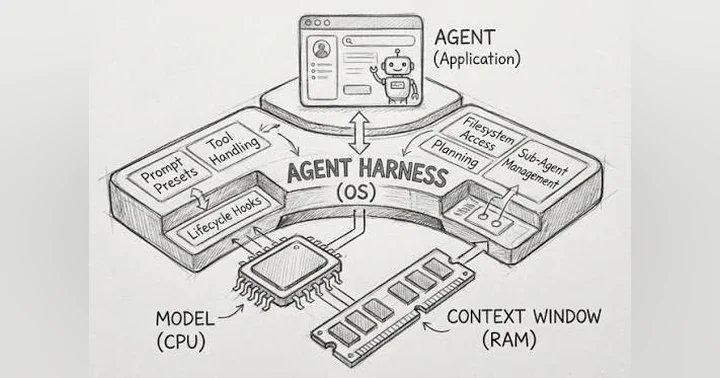
The AI Harness: Moving Beyond the Model